Let's talk about baby walker. For years, they've been a topic of lively debate among parents, pediatricians, and, frankly, anyone who's ever watched a little one wobble around. Are they good? Are they bad? Well, the truth, as often happens, is a bit nuanced, and modern designs have certainly evolved. I remember my own little cousin zooming around in one – a definite game-changer for his parents, giving them a few moments of peace!
The Shifting Landscape of Baby Mobility Aids
Industry trends in baby products, including baby walker designs, have really honed in on safety and multi-functionality. Gone are the days of flimsy, basic plastic frames. Today, we're seeing walkers that often double as activity centers, push toys, or even stationary entertainers. This shift is, to be honest, largely driven by consumer demand for versatile products and stricter safety standards globally. Many manufacturers are also focusing on more durable and sometimes even eco-friendly materials, which is a welcome change.
Understanding the Build: Materials & Methods
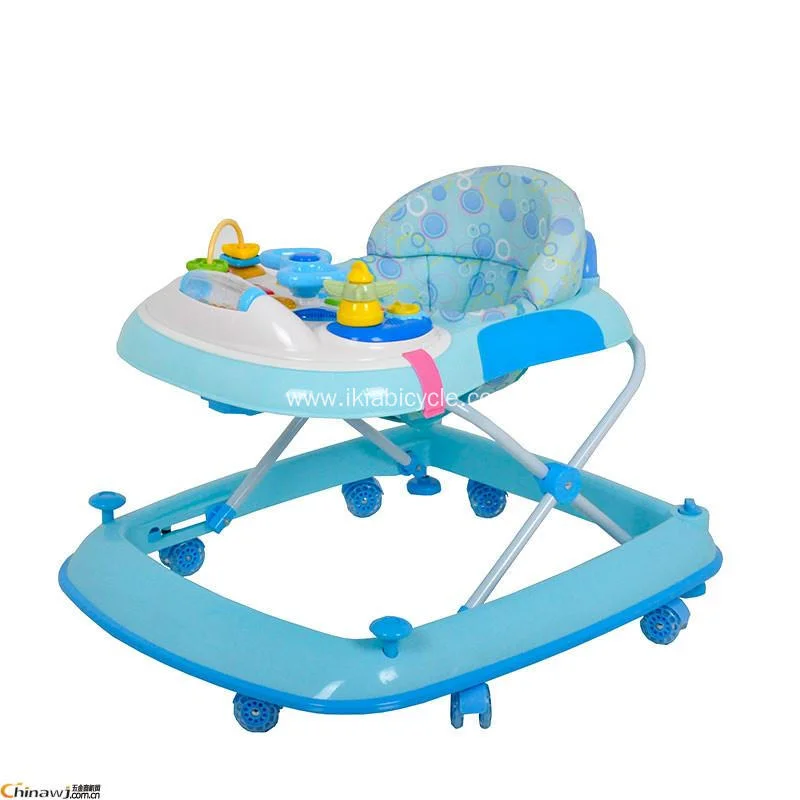
When you're looking at a modern baby walker, it's not just about the cute colors. The construction process is actually quite rigorous. Most high-quality walkers, like the "Rotating Baby Walker with Record," utilize robust plastics such as PP (polypropylene) and ABS (acrylonitrile butadiene styrene) for the main body and activity trays. These are chosen for their durability, non-toxicity, and ease of cleaning. The structural frame, where stability is paramount, often incorporates sturdy steel or high-grade aluminum, ensuring it can withstand enthusiastic baby bouncing and bumps.
The manufacturing process typically involves injection molding for plastic components, followed by meticulous assembly. Critical features like multi-directional wheels, height adjustment mechanisms, and integrated activity centers are then added. Rigorous testing, often adhering to international standards like ASTM F977 in the US or EN 1273 in Europe, is performed throughout. This includes stability tests, load-bearing checks, and assessments for pinch points or sharp edges, ensuring the product's service life is both safe and substantial.
A Closer Look: Product Specifications
Let's take a common example, like the "Rotating Baby Walker with Record." It really showcases some of the best features you can expect:
Feature | Detail |
Main Materials | Durable PP, ABS Plastic, Steel Frame |
Design | Rotating Base/Wheels for 360° movement |
Activity Tray | Integrated 'Record' (Music/Sounds) and Toys |
Adjustability | Multi-height settings for growing infants |
Safety Features | Anti-tip base, non-slip pads, comfortable seat |
Age/Weight Range | Typically 6-18 months, up to ≈ 12 kg |
Certifications | CE, ASTM (common examples, real-world may vary) |
Note: Specifications are illustrative and may vary by specific model and production batch.
Application & Advantages: Where Walkers Shine (and Don't)
A baby walker excels as a supervised entertainment tool. It offers babies a sense of mobility before they can walk independently, allowing them to explore their immediate environment from a new perspective. This can be great for developing spatial awareness and curiosity. For parents, it provides a safe, contained space for their infant, giving them a brief window to tackle other tasks – something many customers, myself included, truly appreciate! They're great for supervised play sessions, offering an infant walker with wheels that provides some freedom while stimulating their senses with baby walker toys.
However, it's crucial to understand their limitations. They are NOT a substitute for floor time, which is essential for developing crucial crawling and walking muscles. And supervision is non-negotiable; never leave a child unattended in a baby walker, especially near stairs or uneven surfaces. The key is balance and using them as an aid, not a crutch.
Customization and Vendor Choices
Many manufacturers, particularly those supplying larger markets or online retailers, offer significant customization (OEM) options. This means you can often find variations in color, fabric patterns, specific activity tray toys, and even branding. It's a huge benefit for businesses looking to offer a unique baby push toy walker to their customers.
When it comes to vendors, there's a broad spectrum. Here's a quick, generalized comparison:
Vendor Type | Key Characteristics | Typical Offerings |
Budget-Friendly | Focus on basic functionality, competitive pricing | Standard designs, fewer bells & whistles |
Mid-Range/Standard | Good balance of features, safety, and price | Adjustable height, activity trays, basic safety |
Premium/Innovator | Advanced safety, unique designs, high-quality materials | Multi-functional (2-in-1, 3-in-1), advanced activity centers, ergonomic |
The "Rotating Baby Walker with Record" would likely fit into the mid-range to premium category due to its rotating feature and integrated activity center.
Final Thoughts: Making the Right Choice
Ultimately, choosing a baby walker is about understanding your needs, your baby's developmental stage, and critically, prioritizing safety. Always look for products that meet stringent safety certifications and, I guess, trust your gut. Many customers say that a good walker can be a true lifesaver for those moments when you need two hands free, provided it's used correctly and safely. It's a testament to how far these infant mobility aids have come, blending fun and function responsibly.
Authoritative Citations:
1. American Academy of Pediatrics. "Walkers for Babies." Link to example abstract (actual AAP policy may vary).
2. ASTM International. "ASTM F977 - Standard Consumer Safety Specification for Infant Walkers." (Example, check latest standard)
3. European Committee for Standardization. "EN 1273 - Baby walking frames — Safety requirements and test methods." (Example, check latest standard)