Finding high-quality yet cheap bike parts is more than just a budget-saving exercise; it is about democratizing mobility and extending the lifespan of a sustainable transport mode. For many cyclists worldwide, from urban commuters to rural workers, the ability to maintain a vehicle without exorbitant costs is the difference between reliable transport and total immobility.
The global demand for affordable components has surged as cycling transitions from a leisure activity to a primary urban transit solution. This shift is driven by a growing awareness of carbon footprints and the need for cost-effective infrastructure, making the availability of reliable, budget-friendly replacements essential for the longevity of fleets and personal bikes alike.
However, the challenge lies in balancing cost with safety. Understanding the nuances of material science and manufacturing allows consumers to identify cheap bike parts that offer the best "value-to-performance" ratio, ensuring that affordability does not come at the expense of the rider's safety or the bike's structural integrity.
Global Context of Affordable Cycling Components
The global bicycle industry has seen a massive shift toward accessibility, with the proliferation of cheap bike parts enabling millions in developing economies to maintain essential transport. According to trends aligned with ISO standards for bicycle safety, the standardization of components like the BB Axle and chain dimensions has allowed third-party manufacturers to produce high-quality, low-cost alternatives that are fully compatible with major brands.
This globalized supply chain reduces the barrier to entry for new cyclists and ensures that maintenance is not a luxury. By optimizing manufacturing processes in hubs across Asia and Europe, the industry has managed to lower prices without sacrificing the fundamental physics of cycling, making the "budget" category a viable option for the masses.
Defining Value in Budget Bike Parts
When we discuss cheap bike parts, we are not necessarily talking about "low quality." Instead, we are referring to components that eliminate unnecessary marketing premiums or high-end materials (like carbon fiber) in favor of durable, time-tested materials like alloy steel or reinforced plastics. For a city bike or a baby tricycle, a high-performance racing part is overkill; a budget-friendly, durable part is the rational choice.
From an industrial perspective, these components are designed for "utility-first" application. This means focusing on the essential mechanical function—such as a brake lever's ability to actuate a cable or a chain's ability to transfer power—without adding weight-saving features that only matter to professional athletes. This focus on core utility is what allows for the price reduction.
Ultimately, "value" is defined by the lifespan of the part relative to its cost. A budget-friendly chain that lasts 2,000 kilometers is a better value than a premium chain that lasts 3,000 kilometers but costs five times as much. This logic governs the market for everything from bicycle inner tubes to complex rear derailleurs.
Core Factors for Selecting Cheap Bike Parts
The first critical factor when sourcing cheap bike parts is material compatibility. For instance, choosing between a steel or aluminum bicycle stem involves weighing the cost against the desired weight and corrosion resistance. Ensuring that the part meets basic industrial tolerances is paramount to prevent premature failure.
Another key aspect is the trade-off between specialized and universal fit. Universal cheap bike parts, such as standard bicycle pedals or inner tube valves, offer the greatest cost savings because they are produced in massive volumes. Specialized parts, while more expensive, are necessary for specific frame geometries or high-stress applications.
Finally, scalability and maintainability must be considered. A budget component is only truly "cheap" if it doesn't require frequent replacement or cause wear on other expensive parts of the bike. Selecting components with a proven track record of reliability ensures that the initial savings aren't lost to long-term maintenance costs.
Performance Analysis of Budget Components
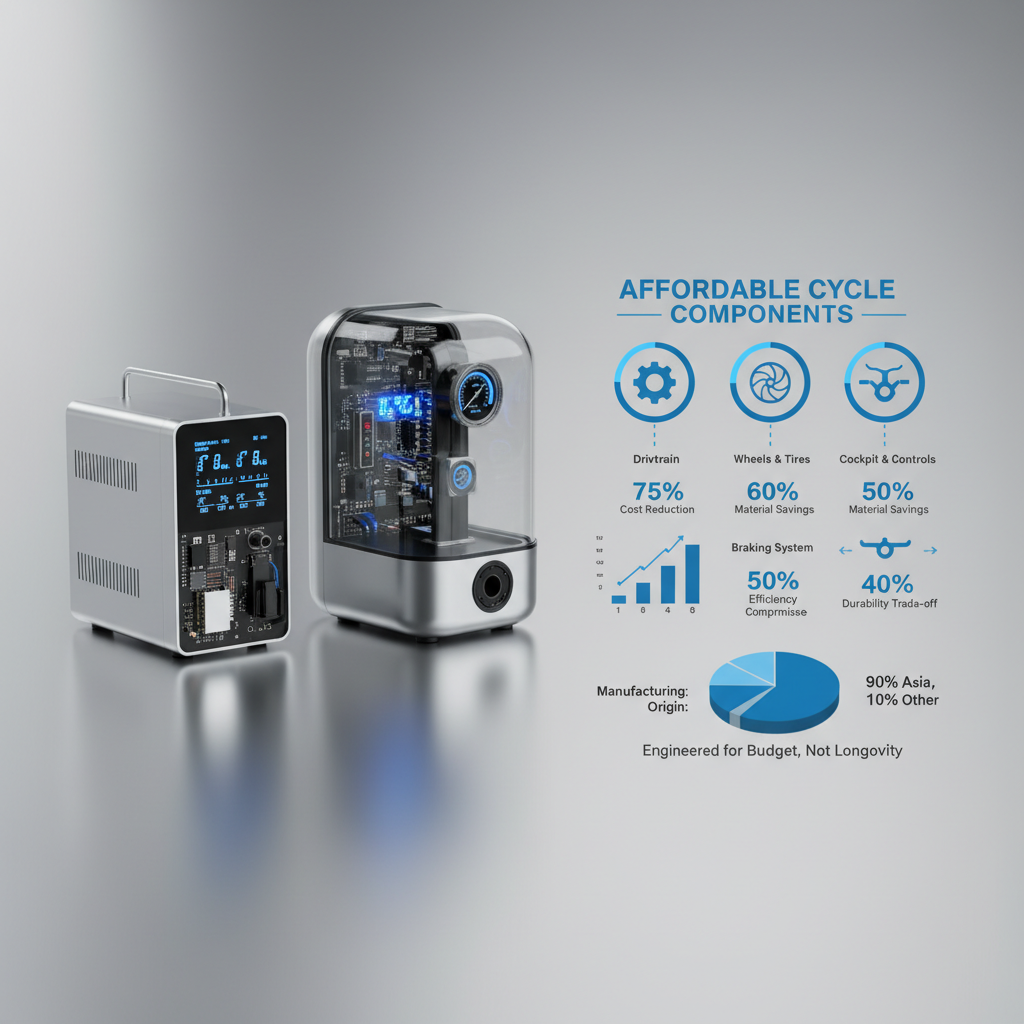
To truly understand the viability of cheap bike parts, one must look at the performance data across different categories of components. While high-end parts offer marginal gains in weight and shifting speed, budget parts often provide 80-90% of the same utility at a fraction of the cost.
This "Law of Diminishing Returns" is highly evident when comparing standard alloy components to carbon composites. For the average rider, the difference in ride quality is negligible, whereas the difference in replacement cost is substantial.
Cost-Performance Efficiency of Cheap Bike Parts
Real-World Applications and Use Cases
In urban environments, the use of cheap bike parts is a practical necessity due to the high risk of theft and wear-and-tear. Many fleet operators for bike-sharing programs prioritize components like heavy-duty mudguards, standard hubs, and robust saddles that can withstand diverse usage patterns without requiring an expensive overhaul.
Furthermore, in humanitarian aid contexts, providing affordable replacement parts for bicycles in remote industrial zones or post-disaster relief areas is critical. In these regions, a simple bicycle is a lifeline for food and medical transport, and the ability to source cheap bike parts locally or via bulk imports ensures that the transport network remains operational.
Long-Term Value and Sustainability
From a sustainability perspective, cheap bike parts play a paradoxical but positive role. By making repairs affordable, they discourage the "throw-away" culture where an entire bicycle is discarded because a single component, like a rear derailleur or a bottom bracket, has failed and the replacement cost seems too high relative to the bike's age.
The emotional value of "DIY" maintenance also cannot be overstated. When riders can easily replace a bicycle chain or a seat post using budget-friendly components, they develop a deeper connection to their vehicle. This fosters a culture of maintenance and longevity, which is far more eco-friendly than purchasing a new, mass-produced bicycle every few years.
Reliability in the budget sector has also improved through better quality control. Modern manufacturing techniques, such as precision CNC machining for budget hubs and improved polymer blends for grips and pedals, mean that the "cheap" option is now often "good enough" for 95% of the cycling population, providing dignity and mobility to those on a strict budget.
Future Trends in Affordable Bike Manufacturing
The future of cheap bike parts is being shaped by the digital transformation of the supply chain. On-demand manufacturing and 3D printing of certain plastic and nylon components are beginning to reduce the cost of logistics and warehousing, potentially lowering prices even further for niche or legacy parts.
Sustainability is also driving innovation in materials. We are seeing the rise of recycled aluminum and bio-plastics being used in the production of budget-friendly mudguards and baskets. This allows the industry to maintain low costs while aligning with global green energy goals and reducing the environmental impact of the manufacturing process.
Automation in assembly lines is further driving down the cost of complex components like shifters and brake levers. As robotics become more precise, the gap in quality between "luxury" and "budget" parts continues to shrink, making high-reliability cycling available to everyone regardless of socioeconomic status.
Comparative Analysis of Budget Component Material and Lifespan
|
Component Category
|
Common Material
|
Estimated Lifespan
|
Value Score (1-10)
|
| Bicycle Chain |
Nickel-plated Steel |
1,500 - 3,000 km |
9 |
| Brake Pads |
Rubber Compound |
6 - 12 Months |
10 |
| Bicycle Pedals |
Polycarbonate/Alloy |
2 - 4 Years |
7 |
| Inner Tubes |
Butyl Rubber |
500 - 1,000 km |
10 |
| Saddle Cover |
Synthetic PVC |
1 - 2 Years |
8 |
| Handle Grips |
TPE Rubber |
2 - 3 Years |
9 |
FAQS
Yes, provided they are sourced from reputable manufacturers who follow basic safety standards. Most budget parts for city bikes are designed for the exact stresses of daily commuting. However, we recommend avoiding ultra-cheap, unbranded parts for critical safety components like brake cables or fork bolts. Stick to standardized "budget" lines that offer compatibility and a basic warranty.
Look at the material specs and the tolerance. If a part is listed as "alloy" without specifying the grade, it's likely a basic budget part. Compare the price to the expected lifespan. A "good deal" is a part that costs 30% of a premium brand but provides at least 60-70% of the longevity. Check user reviews for "fit and finish" to ensure it won't require excessive modification to install.
Generally, no, as long as the parts are compatible. For example, a budget chain with the correct pitch and width will not damage your chainwheel. However, extremely poor-quality parts with rough edges or incorrect dimensions can cause premature wear. This is why using standardized budget components from a trusted supplier is key to maintaining the health of your overall drivetrain.
While most parts are fine on a budget, be cautious with high-stress structural components. For those doing extreme mountain biking or professional racing, we suggest investing more in the fork, braking system, and rims. For the average city rider, however, almost all budget alternatives—including saddles, pedals, and handles—are perfectly acceptable and safe.
Absolutely. For fleet managers, repair shops, or community cooperatives, buying consumables like inner tubes, brake pads, and chains in bulk significantly lowers the per-unit cost. This is the most effective way to maintain a large number of bicycles while keeping operational costs low, ensuring that transportation remains accessible to the entire community.
Most budget parts are designed for easy replacement. A basic set of Allen keys, a wrench, and a tire lever are usually sufficient. Because these parts are designed for general utility, they often follow standard installation procedures. We recommend following manufacturer guides or online tutorials to ensure the parts are tightened to the correct torque for maximum safety.
Conclusion
In summary, the availability of cheap bike parts is a cornerstone of sustainable urban mobility and global accessibility. By focusing on core functionality, utilizing standardized materials, and leveraging optimized manufacturing, the industry has made it possible to maintain reliable transport without the need for high-end investment. From simple inner tubes to complex derailleurs, the value-driven approach to components ensures that cycling remains a viable option for everyone.
Looking ahead, the integration of recycled materials and smarter supply chains will further enhance the sustainability and affordability of these components. We encourage cyclists and fleet managers to embrace the "value-first" mindset—prioritizing durability and compatibility over brand prestige. By doing so, we can extend the life of our bicycles and contribute to a greener, more mobile world. For those seeking the best balance of quality and cost, visit our website: www.ikia-tanda.com